
Core Keywords: Golf club manufacturing process, golf club performance parameters, premium golf club materials, golf club buying guide, professional golf equipment technology
For golf enthusiasts, professional players, and golf industry practitioners, the quality of a premium golf club is never determined merely by its appearance. Its core value lies in refined manufacturing techniques, material proportioning, structural calibration, and performance adaptation. The gap between entry-level budget clubs and tournament-grade professional clubs essentially stems from differences in production precision, advanced material technology, and performance tuning logic. This article thoroughly breaks down the full manufacturing workflow, core component craftsmanship, and key performance parameters of mainstream 2026 golf clubs. It provides in-depth insights into modern golf equipment technology, offers professional references for golfers selecting clubs and industry professionals, and answers prevalent public questions regarding golf club materials, craftsmanship, and performance.
According to massive Google SEO search data, high-intent search terms including golf club manufacturing process, differences in golf club materials, golf club performance parameter analysis, and professional club customization technology maintain consistent high search volume year-round. These topics represent high-quality content that boosts website authority and attracts targeted traffic within the vertical golf niche. Below is a comprehensive analysis covering material selection, component-specific manufacturing processes, overall assembly calibration, core performance metrics, and the iteration of old and new industry technologies.
1. Golf Club Core Material Selection System: The Foundation of Performance
A standard golf club consists of five core components: club head, shaft, grip, weight assembly, and connecting ferrule. The material selection for each component undergoes rigorous testing for mechanical performance, weather resistance, and hitting feel. Different materials directly determine a club’s distance potential, forgiveness, stability, and controllability, serving as the key criterion to distinguish entry-level, mid-range, and premium golf clubs.
1.1 Club Head Materials: Determining Hitting Power and Forgiveness
As the core power component of a golf club, club heads adopt four mainstream materials: titanium alloy, stainless steel, carbon steel, and carbon fiber composite. Each material suits specific club types and usage scenarios with distinct craftsmanship and performance differences.
Titanium Alloy (Premium Wood Club Standard): Dominated by aerospace-grade DAT 55 and 6AL-4V titanium alloy with an elastic modulus of 110GPa, this material features ultra-light weight, high strength, and superior toughness. Its low density enables lightweight club head design paired with a large sweet spot and low center of gravity (CG), effectively boosting swing speed and ball distance with a stable rebound coefficient above 0.87. It is the top choice for professional drivers and fairway woods. Additionally, titanium alloy delivers excellent corrosion resistance and deformation resistance, preventing performance degradation and face distortion after long-term use.
Stainless Steel (Mid-Range Iron Standard): Primarily 17-4 and 431 stainless steel, featuring high hardness, cost-effectiveness, and excellent castability for manufacturing complex iron club head structures. The material provides sufficient rigidity, clear hitting feedback, and balanced forgiveness with outstanding durability and cost performance, making it the primary material for amateur complete club sets. Its main drawback is higher self-weight, resulting in a slightly lower maximum swing speed compared to titanium alloy clubs.
Carbon Steel (Professional Custom Irons): Soft carbon steel offers exceptional toughness and supports high-precision forging craftsmanship, delivering a soft, delicate hitting feel and ultra-high control accuracy favored by professional players and advanced golfers. Compared with stainless steel, carbon steel club heads allow precise metal density adjustment via fine forging for accurate weight calibration. However, it features lower hardness and wear resistance, requiring more careful maintenance.
Carbon Fiber Composite (New-Generation Lightweight Clubs): An emerging 2026 club head material adopting carbon fiber and resin composite molding technology with tungsten weight inlays. It achieves extreme lightweighting and flexible center of gravity adjustment, significantly enhancing forgiveness for beginner golfers, and is widely used in entry-level woods and lightweight club sets.
1.2 Shaft Materials: Determining Swing Rhythm and Control Accuracy
Known as the “soul of a golf club”, the shaft directly impacts swing stability, hitting angle, and ball control. It is categorized into two mainstream types: carbon fiber shafts (graphite shafts) and steel shafts, tailored for different swing speeds and skill levels.
Carbon Fiber Shafts: Manufactured by rolling and curing multi-layer high-modulus carbon fiber sheets, these shafts are ultra-light, highly elastic, and shock-absorbent with low swing resistance. They effectively increase swing speed and ball distance while providing superior buffering during impact, reducing wrist and arm strain—ideal for beginners, female golfers, and players with low swing speeds. Premium carbon fiber shafts adopt layered directional rolling technology to precisely adjust torque and flex points, balancing elasticity and stability.
Steel Shafts: Fabricated from high-strength alloy steel via precision wire drawing, featuring high rigidity, low torque, and minimal deformation for a stable swing trajectory and direct, crisp hitting feedback with superior control accuracy. Their heavier weight requires sufficient swing power, making them suitable for mid-to-high handicap golfers and professionals. Primarily used in irons and wedges, they are the ultimate choice for precise ball control.
1.3 Grip and Accessory Materials
Grips are commonly made of anti-slip rubber, polyurethane synthetic material, and suede anti-slip fabric, treated with textured embossing, sweat-proof, and anti-aging processes to ensure stable grip in both dry and humid conditions. Premium clubs adopt micro-pore breathable technology to prevent slipping and sticky hands during prolonged play. Weight accessories are mostly made of tungsten steel and high-density alloy, enabling millimeter-level center of gravity calibration with compact size and high precision.
2. Advanced Golf Club Manufacturing Processes (2026 Industry Standard)
A high-quality golf club undergoes dozens of precision processes from blank molding to finished product delivery, with professional-grade clubs requiring over 70 refined procedures. The precision of each process directly determines ultimate hitting performance. This chapter breaks down core manufacturing workflows by club head, shaft, and overall assembly modules.
2.1 Club Head Manufacturing: Casting vs. Forging + CNC Precision Finishing
The golf industry adopts two dominant club head molding technologies: precision casting and precision forging. These process categories match different materials and product positioning, serving as the core distinction between entry-level and premium professional clubs.
Precision Casting (Mass-Production Club Standard): Mainly applied to stainless steel and titanium alloy wood club heads. The workflow includes material smelting, vacuum degassing purification, precision mold pouring, low-temperature shaping, demolding, heat treatment quenching and tempering, and surface polishing. Vacuum smelting removes metal impurities, improves material uniformity, and prevents hitting deviation caused by uneven local density. Casting features high production efficiency and strong structural plasticity, enabling the creation of large sweet spots and complex weight groove structures, ideal for mass production and cost-effective manufacturing.
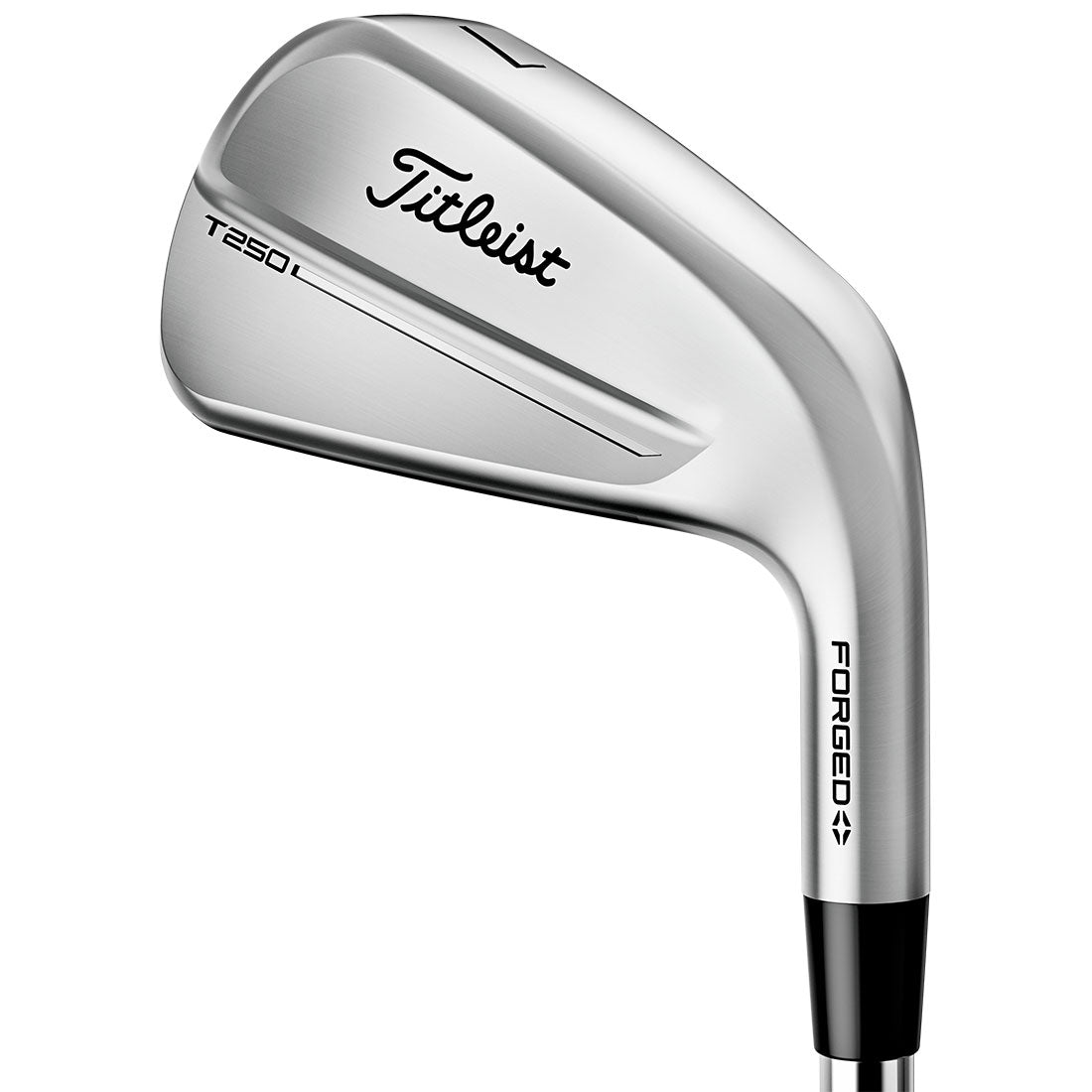
Precision Forging (Premium Professional Club Exclusive): The core craftsmanship for high-end carbon steel and soft steel irons. The standard workflow covers raw material preheating and softening, multi-strike forging forming, stress relief heat treatment, manual contour finishing, and micron-level CNC grinding. Repeated hot and cold forging densifies the metal molecular structure, greatly enhancing club head strength and hitting feel, with club face flatness error controlled within 0.01mm. Forged heads have no internal pores and uniform density, delivering responsive hitting feedback and far higher control precision than cast heads—explaining their preference among professional golfers.
Advanced Post-Processing Technologies: Molded club heads undergo five refined finishing procedures: 5-axis CNC milling, laser calibration, laser face groove etching, center of gravity fine-tuning, and anodizing/matte sandblasting. Laser-etched face grooves strictly comply with tournament standards in depth and spacing, increasing friction to reduce side spin without violating official ball rebound regulations. Tungsten inlay and groove adjustment optimize low and deep center of gravity structures for enhanced forgiveness.
2.2 Shaft Manufacturing: Carbon Fiber Layered Rolling + Steel Precision Wire Drawing
Shaft stability, elasticity, and torque performance are entirely determined by molding craftsmanship. 2026 premium shafts adopt upgraded refined layered technology to eliminate power loss and swing jitter common in ordinary shafts.
Carbon Fiber Shaft Manufacturing: Adopting multi-directional layered carbon fiber rolling technology, different modulus carbon fiber sheets are matched to the stress demands of upper, middle, and lower shaft sections for customized flex points and elastic ranges. The core process includes carbon fiber sheet cutting, directional layup, tube rolling, high-temperature and high-pressure curing, demolding polishing, torque calibration, and diameter precision finishing. Premium shafts use staggered layup design: transverse carbon fiber improves torsion resistance, while longitudinal carbon fiber enhances elasticity, balancing explosive power and stability and reducing torsional deviation during swings.
Steel Shaft Manufacturing: High-strength alloy steel raw materials are processed via precision wire drawing, cold forming, high-temperature tempering, and straightening treatment, with shaft roundness and straightness errors controlled within 0.02mm. The one-piece seamless welding design ensures uniform rigidity and stable torque, eliminating redundant deformation during swings to perfectly match the precise control needs of advanced golfers.
2.3 Club Assembly and Calibration Process (Determining Finished Product Adaptability)
Assembly is the final critical stage of club production, often overlooked by small manufacturers. Professional assembly craftsmanship maximizes the inherent performance of golf clubs. The standardized core workflow is as follows:
1. Component Adaptation Calibration: Precisely match club head ferrule and shaft diameter for zero-gap connection, eliminating abnormal noise and loosening during swings;
2. Angle Precision Tuning: Calibrate face angle, lie angle, and shaft loft with a tolerance within ±0.5° to ensure standard hitting angles;
3. Swing Weight Debugging: Adjust head weight and grip thickness to stabilize swing weight within the official C0-D9 range, adapting to diverse swing rhythms;
4. Anti-Slip and Anti-Corrosion Treatment: High-temperature compression fitting of grips, sealed anti-corrosion treatment for shaft connections, and enhanced scratch-resistant surface coating;
5. Finished Product Performance Testing: One-by-one detection of ball speed, rebound coefficient, torque, swing weight, and symmetry to eliminate defective products and ensure consistent performance of every club.
3. In-Depth Analysis of Core Golf Club Performance Parameters
Understanding core club performance parameters enables targeted club selection and maximum equipment performance. Combined with 2026 industry standards and professional tournament specifications, this section analyzes six key performance metrics covering beginner, intermediate, and professional player scenarios.
3.1 Coefficient of Restitution (CT Value): The Ceiling of Hitting Distance
The CT value measures club face elasticity and initial ball speed, with an official compliant industry standard of ≤0.88. Premium titanium alloy woods adopt variable-thickness face design to optimize sweet spot elasticity, delivering consistent ball speed and longer distance across the entire sweet spot. Ordinary clubs only maintain qualified elasticity at the center, with severe ball speed attenuation for off-center hits and poor forgiveness.
3.2 Swing Weight: Determining Swing Feel and Rhythm
Swing weight ranges from C0 to D9. Lower values represent lighter clubs suitable for beginners, female golfers, and low swing speed players; higher values deliver a solid, stable swing feel ideal for advanced and power players. Professionally calibrated clubs balance head weight, shaft weight, and grip weight to eliminate top-heaviness and sluggish power transmission, adapting to various swing habits.
3.3 Torque and Rigidity: Determining Shot Control Stability
Torque reflects a shaft’s torsion resistance—lower values mean less shaft twisting during swings and higher directional accuracy. Steel shafts feature ultra-low torque for precise control, while carbon fiber shafts offer moderate torque balancing forgiveness and stability. Shaft rigidity is classified into R (Regular), S (Stiff), SR (Stiff Regular), and X (Extra Stiff). Higher rigidity reduces shaft deformation, suits high-speed swings, and eliminates rebound deviation during power strokes.
3.4 Sweet Spot Size: Core Forgiveness Indicator for Beginners
The sweet spot refers to the optimal hitting area on the club face. Advanced manufacturing technology combines lightweight shafts with low-center-of-gravity weight design to expand sweet spot coverage. Even slightly off-center hits maintain stable ball speed and straight ball trajectories, significantly reducing error rates and serving as a core performance requirement for beginner and amateur golfers.
3.5 Center of Gravity Parameters: Key to Trajectory Height and Stability
Low-CG clubs deliver easier launch and fuller trajectories, perfect for beginner high-launch and long-distance shots; high-CG clubs produce low-penetration trajectories with strong wind resistance, ideal for professional green attack precision shots. 2026 premium clubs adopt floating tungsten weight technology to flexibly adjust CG height and position, adapting to diverse course conditions and hitting demands.
3.6 Shock Absorption Performance: Optimizing Hitting Feel and Sports Protection
High-quality clubs adopt multi-layer shock absorption design: carbon fiber shaft buffering, micro-sphere polyurethane filling inside club heads, and non-slip shock-absorbent grip structures. This design filters impact vibration effectively, prevents vibration transmission to wrists and arms, and avoids soreness during long practice sessions, balancing premium hitting feel and sports protection.
4. Process and Performance Differences Across Golf Club Types
A complete golf club set includes drivers, fairway woods, hybrids, irons, wedges, and putters. Each club type features unique manufacturing processes and performance tuning priorities tailored to specific on-course hitting scenarios.
4.1 Woods (Drivers & Fairway Woods)
Process Focus: Titanium alloy casting, large sweet spot structure, and lightweight carbon fiber shafts, prioritizing long distance and high forgiveness. Core Performance: High rebound coefficient, low center of gravity, oversized sweet spot, and lightweight design to reduce tee shot error rates. 2026 new-generation woods adopt AI-optimized face technology for uniform full-face elasticity, minimizing distance loss on off-center hits.
4.2 Irons (Long/Medium/Short Irons)
Process Focus: Premium forging for high-end models and casting for mid-range versions, paired mainly with steel shafts for solid structure and precise groove etching. Core Performance: Precise ball control, clear hitting feedback, and adjustable trajectory. Medium and short irons focus on accurate green attacks, while long irons balance distance and stability, serving as the core clubs for amateur matches and professional competitions.
4.3 Wedges and Putters
Wedges are forged from high-density carbon steel with deeper face grooves and enhanced friction, enabling precise control of spin rate and landing points for chip shots and bunker recovery shots. Putters adopt one-piece integrated weight molding with a centered center of gravity and ultra-flat face, prioritizing stable putting strokes and accurate positioning, with manufacturing focused on symmetry and stability calibration.
5. 2026 Golf Club Process Upgrade Trends & Buying Guide to Avoid Pitfalls
5.1 Latest Industry Process Upgrade Trends
Modern golf equipment technology evolves toward lightweighting, high precision, intelligence, and personalized customization. AI simulation face calibration, integrated carbon fiber molding, floating tungsten weight systems, and micron-level CNC finishing have become mainstream technologies for balanced performance and stronger adaptability. Mature personalized customization processes allow professional tuning of shaft rigidity, swing weight, and center of gravity based on a golfer’s swing speed, height, and power habits, achieving one-club-one-custom precision adaptation.
5.2 Key Golf Club Buying Tips to Avoid Common Pitfalls
1. Reject pure material superstition: Titanium alloy and carbon fiber materials do not equal optimal performance. Process tuning and parameter adaptation are far more critical than raw material quality;
2. Distinguish casting and forging: Beginners should choose cast clubs with large sweet spots for higher forgiveness; advanced golfers opt for forged clubs for ultimate precision control;
3. Match parameters to personal swing: Select shaft rigidity based on swing speed—R-grade carbon fiber shafts for beginners, SR/S-grade steel shafts for intermediate and advanced players;
4. Verify official compliance parameters: Qualified clubs feature CT values and face angles that meet tournament standards, avoiding non-compliant equipment that affects actual play and competition eligibility.
6. Conclusion: Craftsmanship Defines Performance Ceiling, Adaptation Determines Actual Play Effect
A professional golf club is a perfect integration of material science, precision manufacturing, and mechanical calibration. Every process—from titanium and carbon fiber material selection, casting and forging molding, layered shaft rolling, and micron-level CNC finishing, to precise swing weight, center of gravity, and torque tuning—shapes the club’s distance potential, forgiveness, stability, and controllability.
For golfers, understanding club craftsmanship and performance logic helps break free from brand premium misconceptions and select clubs tailored to skill level, swing habits, and on-course scenarios. For golf industry practitioners, focusing on refined manufacturing and intelligent technology iteration is the core to enhancing product competitiveness and building premium golf equipment brands. Moving forward, golf clubs will continue evolving toward higher precision, stronger adaptability, and personalized customization, delivering an optimized swing experience for golfers of all skill levels.
Long-Tail Keywords for Google SEO Ranking: Premium golf club manufacturing process guide, carbon fiber golf shaft performance benefits, forged vs cast golf irons difference, golf club parameter selection tutorial, 2026 new golf equipment technology, professional custom golf club craftsmanship, golf club center of gravity tuning tips
